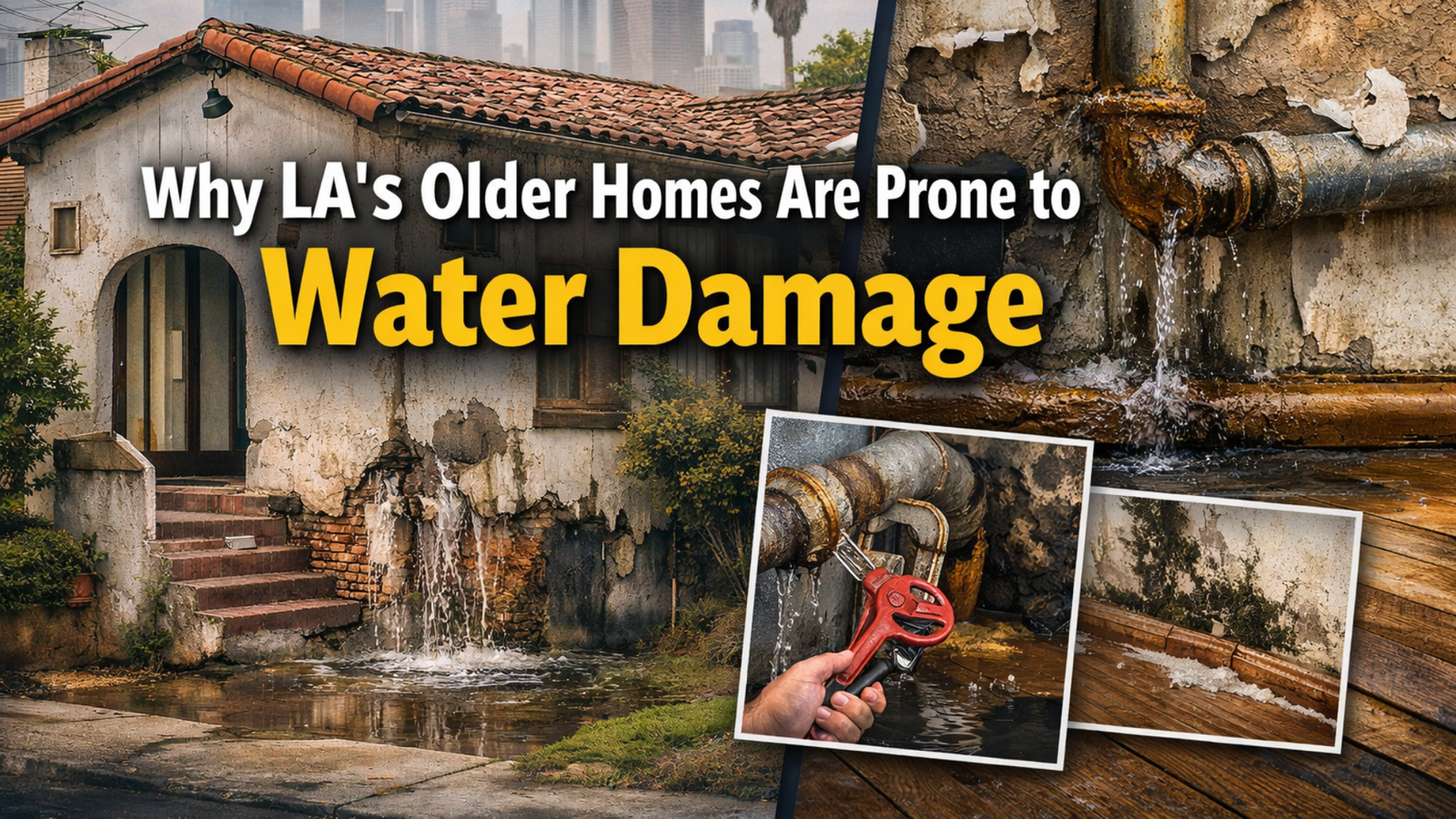
How LA’s Older Homes Are More Likely to Face Water Damage
Los Angeles has neighborhoods that developed over many decades. From older Spanish-style houses to mid-century homes and classic bungalows, many areas of the city still have properties that were built 40, 60, or even more than 100 years ago. While these homes offer architectural charm and character, they also share a common vulnerability that homeowners often underestimate: water damage.
In practice, older homes in Los Angeles face a significantly higher risk of water-related problems compared to newer constructions. This isn’t a theoretical concern or a marketing claim. It’s something restoration professionals, plumbers, and insurance adjusters see repeatedly across the city.
Aging Plumbing Systems Are the Primary Risk Factor
One of the most common causes of water damage in older Los Angeles homes is outdated plumbing. Many houses built before the 1970s still contain original galvanized steel pipes or aging copper lines that have exceeded their expected lifespan.
Galvanized pipes corrode from the inside out. Over time, mineral buildup restricts water flow and weakens pipe walls. Eventually, leaks develop behind walls or under floors, often without visible warning signs. By the time a homeowner notices damp drywall or warped flooring, the damage is already extensive.
Even copper piping, which was considered a premium material decades ago, degrades after years of exposure to LA’s mineral-heavy water supply. Pinhole leaks are common in older copper systems, especially in homes with inconsistent water pressure.
Slab Foundations Make Leaks Harder to Detect
Many older Los Angeles homes are built on concrete slab foundations, particularly in post-war neighborhoods. While slab foundations were popular for their durability, they create serious challenges when plumbing problems occur.
Water supply and drain lines often run beneath the slab. When these pipes leak, water spreads under the foundation before surfacing. Homeowners may notice warm spots on floors, unexplained moisture, or a sudden increase in water bills, but the actual source remains hidden.
Southern California’s seismic activity further increases this risk. Even small earthquakes can stress underground pipes over time, loosening joints and accelerating leaks beneath slab foundations.
Roof Aging and Weather Exposure
Although Los Angeles is known for its dry climate, rainfall events can be sudden and intense. Older homes with original or poorly maintained roofs are especially vulnerable when storms hit.
Many historic properties still rely on clay tile roofs, wood shake materials, or underlayment that has not been replaced in decades. While these roofing systems can last a long time, they are not immune to deterioration. Cracked tiles, brittle underlayment, and aged flashing allow water to seep into attics and wall cavities.
Because these leaks often occur slowly, water damage may go unnoticed until mold growth, ceiling stains, or structural wood rot becomes visible. If you want to understand how professionals handle water emergencies, you can read about the quickest flood restoration techniques used to reduce damage after flooding.
Outdated Drainage and Sewer Infrastructure
Another overlooked factor is neighborhood drainage design. Many older Los Angeles communities were developed before modern stormwater management standards. As a result, properties may lack proper grading or drainage systems to direct water away from foundations.
During heavy rain, water can pool near the home or overwhelm aging sewer lines. In some cases, this leads to sewer backups through floor drains or toilets, causing contaminated water damage inside the property.
Older sewer connections are also more susceptible to root intrusion, cracks, and collapses, especially in areas with mature trees and shifting soil.
Windows, Stucco, and Exterior Wear Over Time
Exterior materials in older homes also contribute to water intrusion. Single-pane windows with original wood frames are common in historic LA properties. Over decades, seals dry out, paint peels, and wood deteriorates, allowing moisture to enter during storms.
Similarly, traditional stucco exteriors often develop hairline cracks over time. While these cracks may seem cosmetic, they provide pathways for water to penetrate walls, particularly during prolonged rainfall.
In coastal or near-coastal areas like Santa Monica, Venice, and parts of Long Beach, salt air and humidity accelerate this wear, increasing the likelihood of hidden water damage.
Deferred Maintenance Increases the Impact
Water damage in older homes is often more severe not because the initial problem is larger, but because it goes undetected for longer periods. Deferred maintenance plays a major role.
Routine inspections of plumbing, roofing, and drainage systems are essential in aging properties. When these checks are skipped, minor leaks evolve into major restoration issues involving flooring removal, drywall replacement, and structural drying.
From an insurance perspective, this matters. Many water damage insurance claims are denied when insurers determine that damage resulted from long-term neglect rather than a sudden, accidental event.
Mold Growth Becomes a Secondary Risk
Once water damage occurs, older homes are more susceptible to mold growth. Many lack modern ventilation systems, vapor barriers, or moisture-resistant building materials.
Plaster walls, crawl spaces, and poorly ventilated attics create ideal conditions for mold to grow unnoticed. In Los Angeles, where indoor moisture often lingers even after rain subsides, mold can spread within days of a water intrusion event.
This not only complicates restoration but can also impact indoor air quality and long-term property value.
Why Water Damage Restoration Is More Complex in Older Homes
Restoring water damage in older LA homes is rarely straightforward. Materials may be discontinued, structural components may absorb moisture deeply, and repairs often trigger code upgrade requirements.
What might be a simple cleanup in a newer home can turn into a multi-phase restoration project in an older one, involving plumbing replacement, structural drying, and careful reconstruction to preserve the home’s character.
Final Thoughts: Awareness Is the First Line of Defense
Older homes are a vital part of Los Angeles’ identity, but they require a higher level of awareness when it comes to water damage risk. Aging plumbing, slab foundations, outdated drainage, and weathered exteriors all contribute to vulnerabilities that homeowners should not ignore.
Understanding these risks allows property owners to take preventive action, plan upgrades strategically, and avoid costly surprises. In a city where older homes are both common and valuable, proactive water damage awareness is not optional it’s essential.