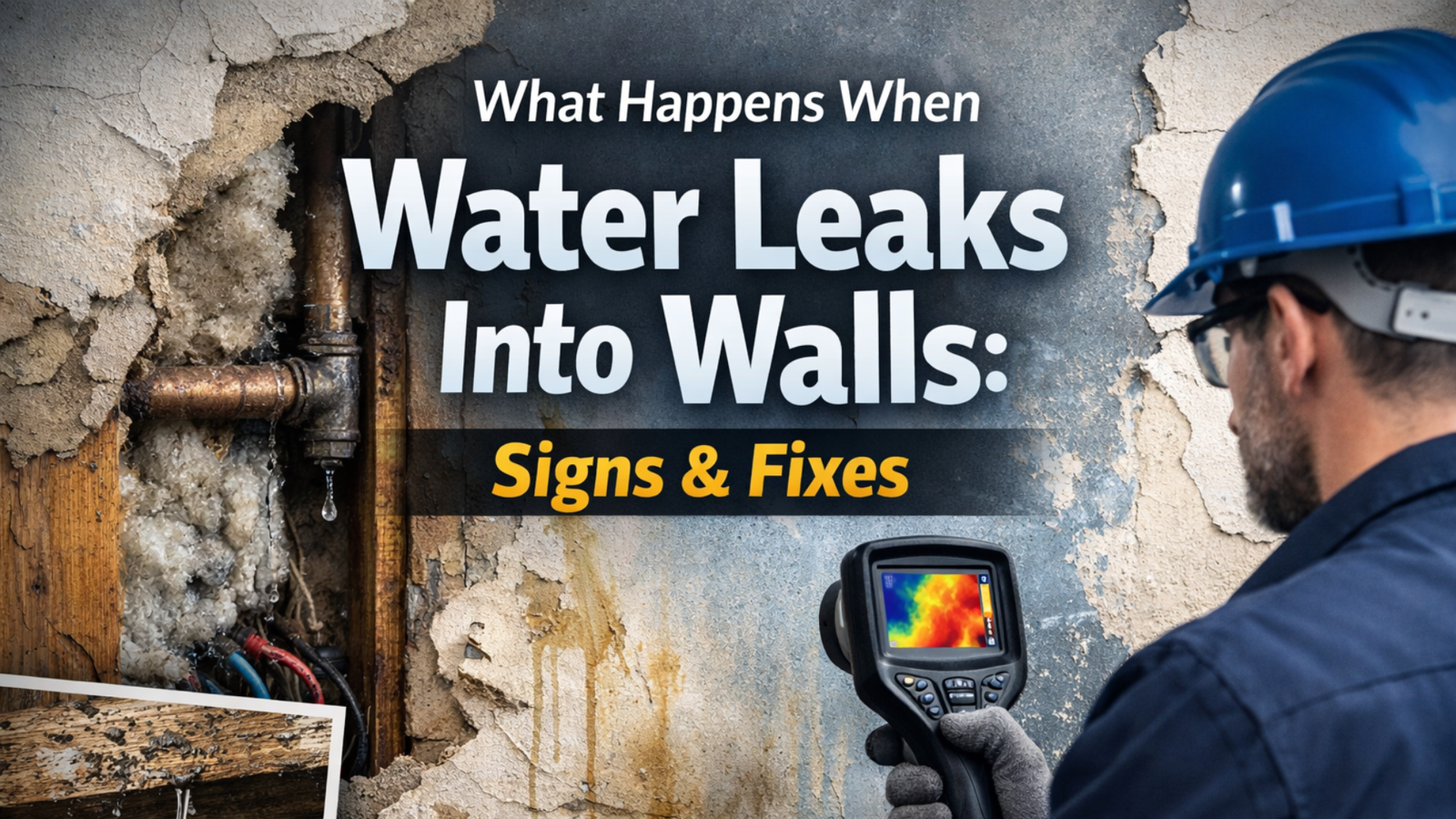
What Happens When Water Leaks Into Walls (Signs & Fixes)
Water leaks inside walls are one of the most dangerous and commonly ignored home problems, especially when it involves water leaking into walls without visible signs. Hidden wall leaks can silently damage your property for weeks or even months before you notice anything is wrong. By the time signs appear, structural materials, insulation, and even indoor air quality may already be compromised due to hidden water damage in walls.
Understanding what happens when water leaks into walls, how to recognize early warning signs of water damage inside walls, and how to fix the issue properly can save homeowners from costly repairs, mold remediation, and long-term health risks.
How Does Water Get Inside Walls?
Water intrusion in walls usually occurs due to a combination of plumbing failures, weather exposure, or construction flaws. These issues often lead to water leaking into walls without immediate detection. Common sources include:
- Burst or leaking water supply pipes
- Damaged drain or sewer lines
- Roof leaks traveling downward into wall cavities
- Cracks in exterior walls or siding
- Poor window or door sealing
- Faulty waterproofing behind bathrooms or kitchens
Once water enters the wall cavity, it becomes trapped behind drywall, plaster, or insulation, creating moisture inside walls that worsens over time and accelerates structural damage.
What Happens Inside the Wall After a Leak Starts?
When water leaking into walls begins, the damage doesn’t stop at surface stains. Several destructive processes start almost immediately, causing water damage inside walls that remains hidden from view.
1. Drywall and Insulation Absorption
Drywall is highly porous. It absorbs moisture quickly, becoming soft, swollen, and weak. Insulation inside the wall holds water like a sponge, preventing evaporation and trapping moisture inside walls, which accelerates deterioration.
2. Mold and Microbial Growth
Within 24 to 48 hours, moisture creates ideal conditions for mold spores to grow. Mold spreads behind walls where it’s difficult to see, a common outcome of water leak behind walls, and can release airborne spores into living spaces.
3. Structural Deterioration
Prolonged exposure caused by water leaking into walls weakens:
- Wooden studs and framing
- Metal fasteners (causing corrosion)
- Load-bearing supports
Over time, this compromises the structural integrity of the home and increases repair costs.
4. Electrical Hazards
Water inside walls can reach electrical wiring, increasing the risk of:
- Short circuits
- Power failures
- Fire hazards
This makes hidden water damage in walls not just destructive but dangerous.
Warning Signs of Water Leaks in Walls
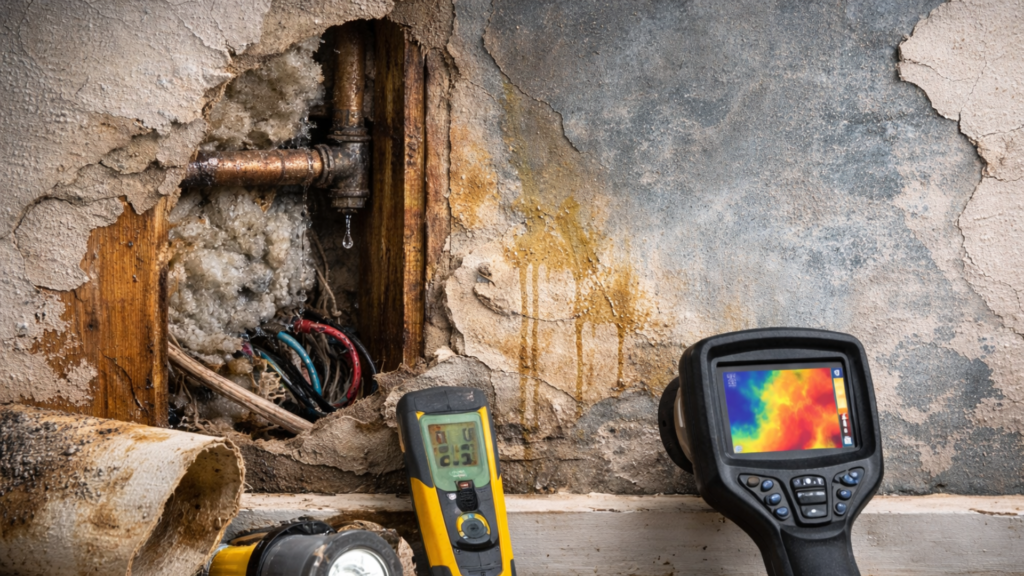
Hidden wall leaks often show subtle symptoms at first. These are common signs of water damage in walls that homeowners should never ignore:
Visible Signs
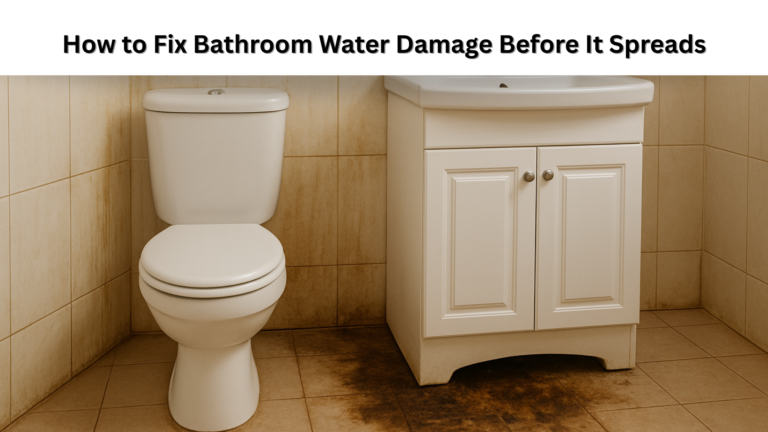
- Yellow, brown, or dark water stains on walls or ceilings
- Peeling paint or bubbling wallpaper
- Warped or bulging drywall
- Cracked plaster
- Sensory Clues
- Musty or damp odors
- Unexplained humidity in specific rooms
- Moldy smells near walls or outlets
Structural & Functional Signs
- Soft or spongy walls when pressed
- Sudden increase in water bills
- Sounds of dripping or running water when no fixtures are on
Ignoring these warning signs allows water leaking into walls to spread deeper into the property.
Health Risks Caused by Water Inside Walls
One of the most serious consequences of water damage inside walls is its impact on indoor air quality. When water leaking into walls leads to mold growth, it can trigger:
- Allergic reactions
- Asthma flare-ups
- Respiratory infections
- Headaches and fatigue
Children, elderly individuals, and people with compromised immune systems are especially vulnerable, making hidden wall moisture a serious health concern.
How Professionals Detect Hidden Wall Leaks
To understand how to detect water leaks in walls, experienced water damage restoration professionals use advanced tools to locate moisture without unnecessary demolition, including:
- Moisture meters
- Infrared thermal imaging cameras
- Hygrometers
- Non-invasive leak detection equipment
These methods help pinpoint the source and severity of water intrusion in walls, ensuring accurate diagnosis and effective repairs. For more detailed insights on kitchen water damage and what homeowners in Los Angeles need to know, check out this expert guide here
How to Fix Water Leaks Inside Walls
Knowing how to fix water leaks inside walls requires more than surface repairs. Proper wall water damage repair depends on the severity and duration of water leaking into walls.
Step 1: Stop the Source of Water
This may involve:
- Repairing or replacing damaged pipes
- Sealing exterior cracks
- Fixing roof or window leaks
Without stopping the source, water damage inside walls will continue.
Step 2: Dry the Affected Area
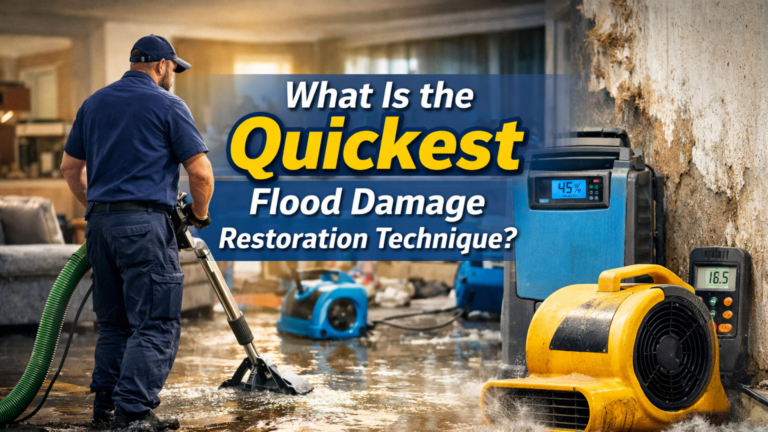
Professional drying equipment such as:
- Industrial air movers
- Dehumidifiers
- Controlled airflow systems
These equipment used to remove trapped moisture from wall cavities and insulation as part of professional water damage restoration.
Step 3: Remove Damaged Materials
In many cases, drywall, insulation, or baseboards affected by water leaking into walls must be removed to prevent mold regrowth.
Step 4: Mold Remediation (If Needed)
If mold is present, certified mold remediation specialists are required to safely remove contamination caused by prolonged moisture inside walls.
Step 5: Wall Restoration
Once the area is fully dry and clean:
- New drywall is installed
- Surfaces are sealed and painted
- Walls are restored to pre-damage condition
Can You Ignore a Small Wall Leak?
Many homeowners delay repairs because the damage seems minor. Unfortunately, even small cases of water leaking into walls can lead to:
- Extensive mold infestation
- Rotting wood framing
- Expensive reconstruction
- Reduced property value
Early repair of water damage inside walls is always more affordable than major restoration. Older properties are especially vulnerable to these issues, which is why many Los Angeles homeowners experience water damage in aging homes over time. If you want to learn more about why older homes in Los Angeles are more prone to water damage, you can read this guide.
How to Prevent Water Leaks in Walls
Preventing water intrusion in walls is essential for long-term property protection:
- Inspect plumbing regularly
- Seal windows and exterior cracks
- Maintain roofing and gutters
- Install leak detection systems
- Address humidity issues promptly
These steps significantly reduce the risk of hidden water damage in walls.
Why Professional Water Damage Restoration Matters
DIY solutions rarely address moisture trapped behind walls. Professional water damage restoration services provide:
- Technical expertise
- Advanced equipment
- Structural drying solutions
- Experience handling mold and structural issues
This ensures long-term safety after water leaking into walls, not just cosmetic repair.
Final Thoughts
Water leaking into walls is a silent but serious threat that can lead to structural damage, mold growth, electrical hazards, and health risks if ignored. Recognizing the early signs of water damage inside walls and acting quickly can protect both your home and your health.
If you suspect moisture inside walls, professional inspection and certified water damage restoration are the safest and most effective solutions. Addressing wall leaks early isn’t just smart it’s essential.